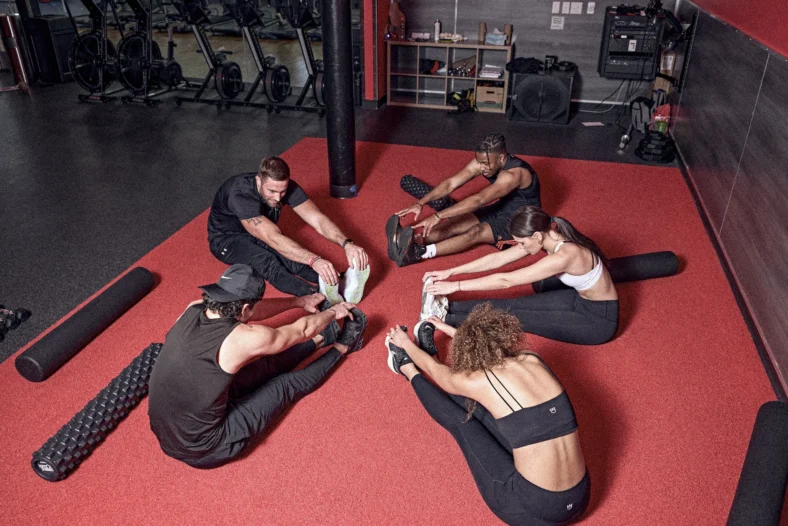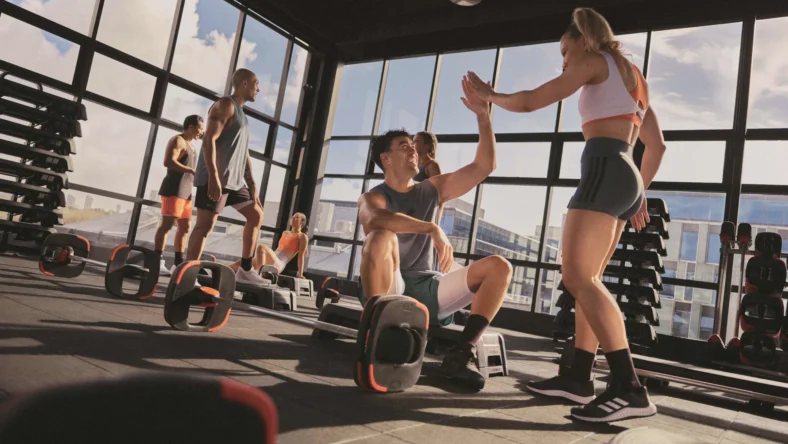
people high five each other after a workout
credit: Les Mills
This week, we break down a recent report finding that nearly all consumers prefer human coaching to AI workout guidance, the controversy over PureGym’s pod entry tech in NYC and Peloton’s continued efforts to become more than a bike company

Artificial intelligence is revolutionizing nearly every aspect of society, but the gym is hallowed ground for human connection.

This week, Les Mills released a new report finding that just 10% of consumers globally prefer AI workout guidance over a human coach.

According to the survey of more than 10,000 consumers across five continents, 52% of respondents leaned human-first, with 31% strongly preferring a real trainer and another 21% leaning that way. Importantly, Gen Z and Millennials strongly preferred human coaches — Les Mills found that just 11% of 16-27-year-olds and 9% of 28-40-year-olds prefer AI-generated content.

Gyms are also pushing new tech in other ways, but many consumers aren’t on board. Since taking over for Blink Fitness, PureGym has brought its automated entry pods over from the U.K. to New York City. The problem? Many Big Apple gymgoers don’t like the tech, with some complaining on social media that they find the pods dangerous and claustrophobic. Others, meanwhile, don’t like that there’s no human staff at the front desk.

PureGym, for its part, has maintained that its pods are in compliance with all relevant fire codes and the Americans with Disabilities Act. But the uproar underscores a wider trend: fitness consumers want to maintain the human element when they go to the gym.

Peloton Reiterates Strategy Around Strength, Wellness Content

Connected fitness weights
credit: Peloton

In a letter to shareholders earlier this month, Peloton CEO Peter Stern doubled down on the idea that the connected fitness giant doesn’t want to be known as a bike company. In the letter, Stern identified more strength training content and more holistic wellness content as the keys to Peloton’s future.

Amid the rise of GLP-1s, Stern called pairing cardio with strength training a “new and growing member acquisition opportunity,” and hinted that Peloton could be working on new hardware along those lines.

He also noted that Peloton plans to push deeper into wellness content, building on the recent acquisition of mindfulness app Breathwrk. Stern also said Peloton wants to “bridge the gap between exertion and nourishment,” suggesting more nutrition content as well.

As Peloton struggles to grow its subscriber numbers in a post-pandemic world where at-home fitness is no longer top dog, the brand’s future likely depends on how well it can make this transition beyond the bike.

News & Notes:

Tags: