The successful magazine CEO spoke with ATN about his latest book and the intense training that’s earned him elite-runner status alongside a robust media career
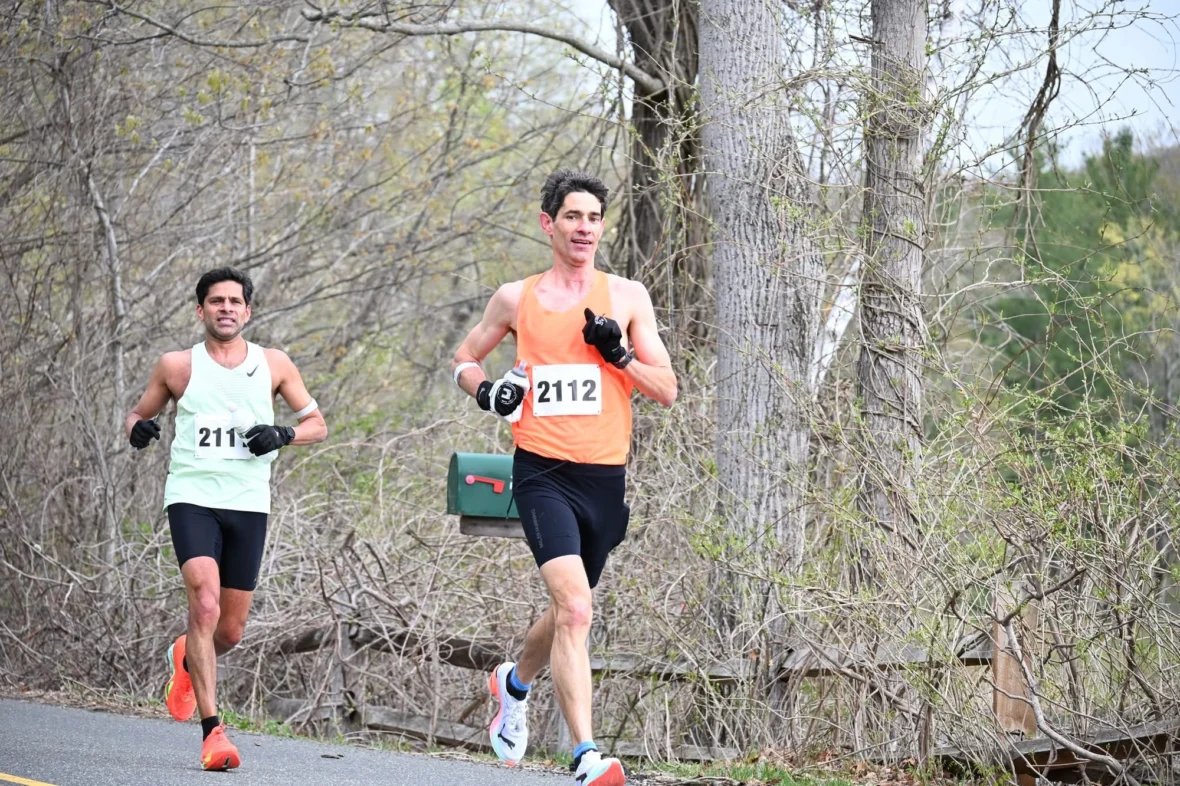
If it wasn’t enough to be the CEO of The Atlantic, one of the most revered and successful magazines there is, Nick Thompson also happens to be an elite runner. A very fast one, at that.
Thompson’s accolades include a 2:29 marathon (that’s about a 5:40 per mile pace) and the 45 to 49 age group American 50K record, both of which he achieved in the past six years, well into his 40s and his journalism career.
“Age is a force that pushes you backwards,” Thompson told Athletech News. “But if you’re smart, you can push yourself forward.”
Thompson’s fastest and best performances emerged years after when runners typically hit their prime. He credits that to smarter, more informed training and a more resilient mind.
“You can run faster into a headwind if you’re running really well than you can with a tailwind if you’re not running well,” he explained. “And so you just have to learn how to identify the variables that are making it worse, identify the things that make it harder, and counter them. And I didn’t when I was in my 30s.”
Thompson’s running journey began at the age of five, driven by his father’s own passion for the sport and their close bond.
In his new book, “The Running Ground: A Father, a Son, and the Simplest of Sports,” he blends memoir, sports psychology and history to recount the complex relationship he had with his dad, while meditating on the sport of running in a portrayal of grief, familial struggle and cancer throughout his own success professionally and athletically.
Thompson revealed to ATN how the sport has taken on a character role in his life: a trusted companion that has helped him navigate loss and success, and a source of strength and pain.
Striking a Balance
Training for ultramarathons and fast marathons is time-consuming, not to mention exhausting.
But Thompson has found that his intense training has only fueled his career, and vice versa. Each has equipped him with the mental skills, endurance and resiliency to excel in both, he argues.
Before becoming The Atlantic CEO in 2021, Thompson had a long and successful career that began as an editor for the magazine Wired, later contributing to Bloomberg, CNN and CBS News, before shifting to editorial work at The New Yorker and rejoining Wired as its editor-in-chief.
“I try really hard to make sure it’s never more than third (priority). It’s never ahead of work or family,” Thompson said of running’s importance in his life.
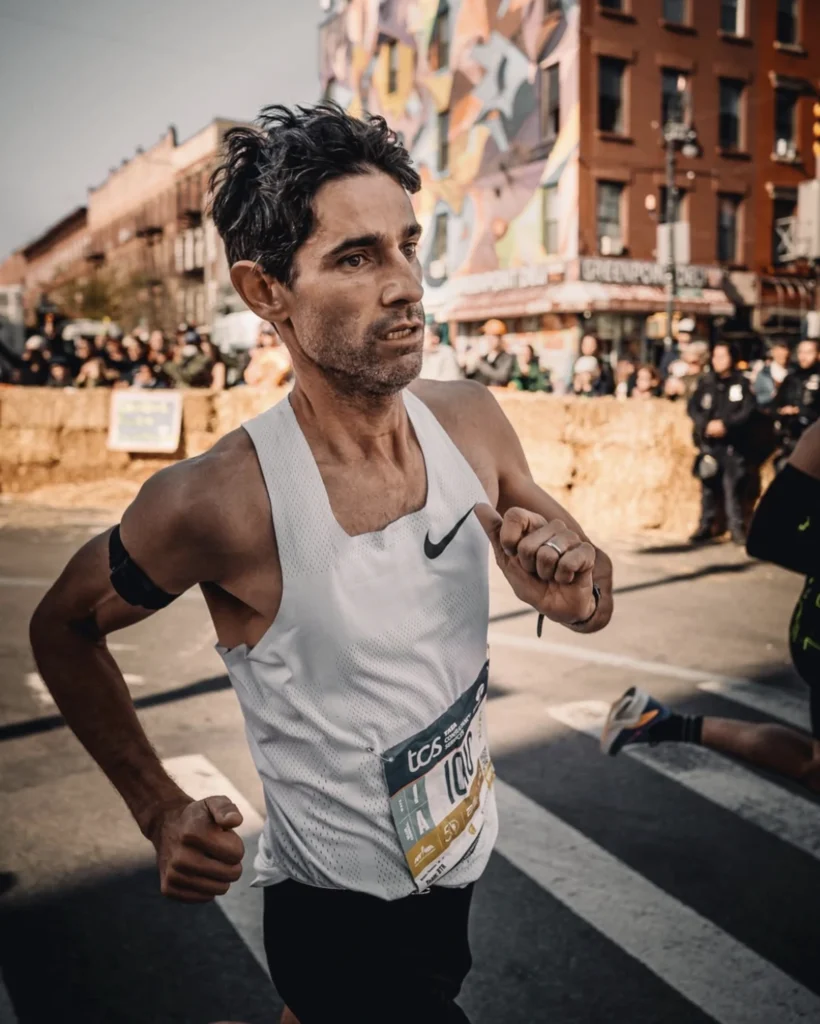
He still somehow found the time to run 70 miles per week, race a 100K (about 62 miles) ultramarathon this past August and run across the Grand Canyon in October. While that might sound like too much to any sane person, Thompson wouldn’t have it any other way.
But he did admit that this training cycle, he may have overdone it.
His goal for this year’s New York City Marathon was another age-group record, but the race didn’t go as planned. Between all of Thompson’s endurance accomplishments this year, his work obligations and traveling, rest was a challenge.
Tendonitis and a respiratory infection emerged, tanking his recovery. His biggest clue was his Whoop scores. Normally, Thompson said, his recovery score is around 65 to 70, but nearing the race, it was as low as one or two. On top of that, his resting heart rate was about 15 beats per minute higher than normal, while his heart rate variability (HRV) dropped 30 points below where it normally was.
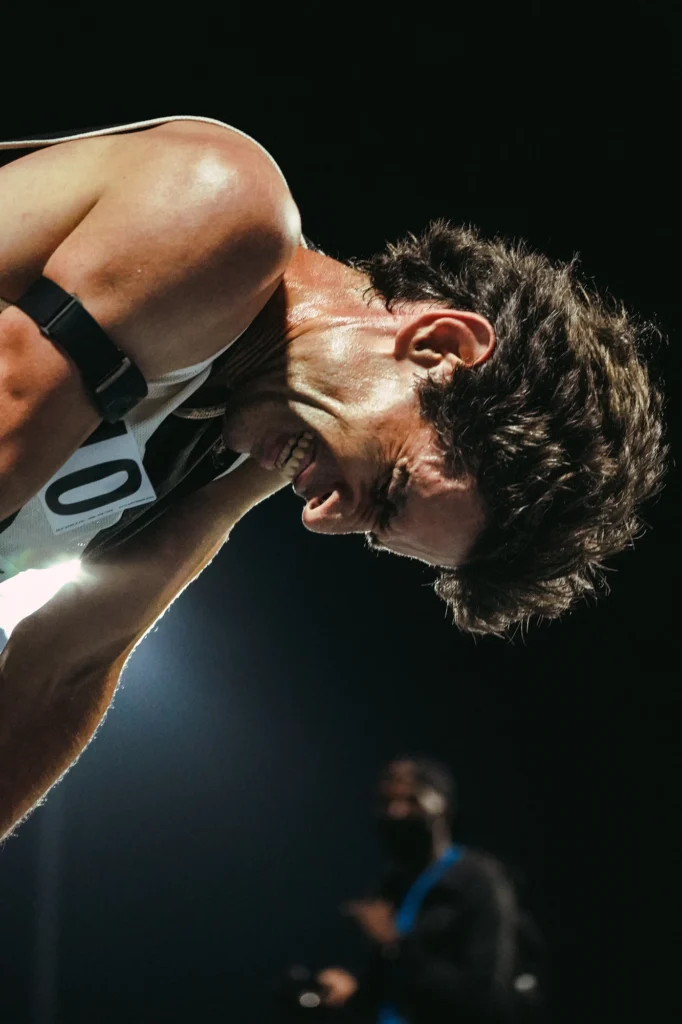
He was 30 minutes off of his goal time and the record, yet the race didn’t seem to shake him.
“I feel fine, whatever. I got a day job, I got kids, I got lots of other stuff,” he said, shrugging it off. “Like, if I have a bad race, I have a bad race.”
But Thompson wasn’t always that way. The pain of intense training was an outlet for the pain of his personal life, the frustrations of teenagehood and finding yourself in your 20s, as he took that internal pain and externalized it during hard workouts.
“It creates a furnace into which you can put your other bad emotions,” he explained. “You can kind of burn off the pain outside yourself. That’s part of why I ran.”
The Health Scare
Thompson’s fitness only kept improving into his 30s as he hammered hard in his training. But just as he was atop cloud nine following an impressive 2:43 marathon finish, his doctor found a lump in his neck.
A few days after his best race to date, Thompson was diagnosed with thyroid cancer.
“I was just a shell of who I was,” he recalled, thinking back to when he underwent treatment. After surgery and radiation, he could barely walk around his block.
“I so wanted to get back to being the person I was before I got sick, and that person was a runner,” Thompson said.
His approach to running transformed after this period, once he was cleared to run again. While training remained intense, Thompson said the furnace that running once was for him morphed into a space for meditative, reflective thinking. It was on runs that he could process the complicated emotions tied to losing his father.
“It was later in life where I realized that you can meditate, you can learn things, you can think, you can process,” Thompson said. “But it took a while to get to that.”
‘Go Do It Right’
Into his runs Thompson carried the words from his father’s diary, thinking about the man he was and how that shaped his own life, especially his ambitions.
“There’s this interesting question of, why is it better to run a 2:40 marathon than a 2:50 marathon, particularly since nobody cares? Why is it better to be fast than not fast?” he said. “And my dad gave me that— whatever you’re doing, you want to be the best.”
During this time, Nike reached out to Thompson and asked if he wanted elite coaching support to go for an ambitious marathon time. He almost said no, but he remembered his father’s voice.
“I knew what my dad would say. He would say, ‘Go do it right,’” Thompson said. “Of course. Why would you want to stay stuck at 2:43 when you have a chance to get faster?”
Working with Nike coaches Steve Finley, Joe Holder and Brett Kirby, Thompson achieved a goal he never thought he could: a 2:29 finishing time at the age of 44.
Thompson admitted that he does fear the cancer will return. If not in his thyroid, then somewhere else in his body. If not cancer, then perhaps the radiation will bring about unforeseen health consequences, too.
“There’s no question that in retrospect, it was a very good thing,” Thompson said of his diagnosis. “It made me more focused in life. It made me more attentive to things that matter.”
“In some ways, I’m very fortunate that it happened to me,” he added. “I think it helped get my life in order.”
Thompson doesn’t know when or what his next race will be following this year’s NYC Marathon disappointment. But after his son told him, “Enter another one immediately and bury that garbage,” he admitted he does have his sights set on redemption.