Is it time to ramp up women-only fitness spaces? A new white paper makes the case that gyms weren’t built for women, and the results from one experiment may change how the industry thinks about club design
The fitness industry may not want to hear it, but what if the gym environment, its membership structures and even its equipment — the kind that operators shell out good money to have to attract and retain members —have been designed in a way that excludes most women?
It’s a “tough truth” that Total Fitness CEO Sophie Lawler declares in the foreword of a new white paper, “Women & the Gym: Unmet Needs and the Role of Women-Only Spaces.”
Though the report draws on U.K. market data, the barriers it identifies may feel familiar to U.S. operators. The findings draw on a nationally representative survey of 5,091 U.K. adults, a member study of 91 women across Total Fitness’s two women-only locations and consultations with more than 150 women.
For U.S. operators, the findings are worth a close look:
Starting Over (Again)
The fitness industry may preach consistency, but for most women, gym membership is rarely a linear experience.
Among female non-members, half have held a membership before, suggesting their absence from their local gym is less about disinterest and more about life disruptions.
Only 19% of current women members report unbroken membership over the past decade, and 41% of female non-members say they’ve taken multiple breaks over the same period, compared to 34% of men.
“These figures point to a simple reality,” the report notes. “Breaks are common. They are not anomalies. They form part of many women’s fitness histories.”
The harder problem is what happens next, as rejoining can feel intimidating. Gym environments must be adaptable when it comes to welcoming those returning, the report notes.
Flexible contracts, a different onboarding experience for returning members, and staff trained to recognize and support women returning are all worth consideration. The report also found that half of current women members rate staff presence for safety and comfort as very or extremely important, while also noting cleanliness, atmosphere and overcrowding consistently shape how they evaluate their experience.
Notably, overcrowding and the intimidation factor are also shown to be the top reasons gym members cancel, according to a separate survey from experience management and survey technology provider Sogolytics.
The conversation is already happening stateside. At this year’s Connected: Health & Fitness Summit in Los Angeles, executives from Les Mills, barre3 and The Well echoed the white paper’s core argument: that women stay not just for what a gym offers physically, but how it makes them feel.
More In Than Out
What’s encouraging is that only 34% of female non-members say they have no interest in joining a gym, while two-thirds are still open to the idea, presenting an opportunity for gym operators.
Unsurprisingly, the primary hurdle is cost, with 42% of female non-members citing finances as a barrier. However, the report notes that this may not solely be about the price itself, but rather about whether the gym membership cost feels justified compared to other household expenses and competing commitments.
Beyond cost, 17% of potential members feel they need to overcome an injury or illness before joining, 12% believe they need to improve their self-image and 9% say they’d feel encouraged to join if they see people like themselves in the gym.
“Designing for participation is not only about attracting new members,” the report notes. “It is about making the first step feel possible.”
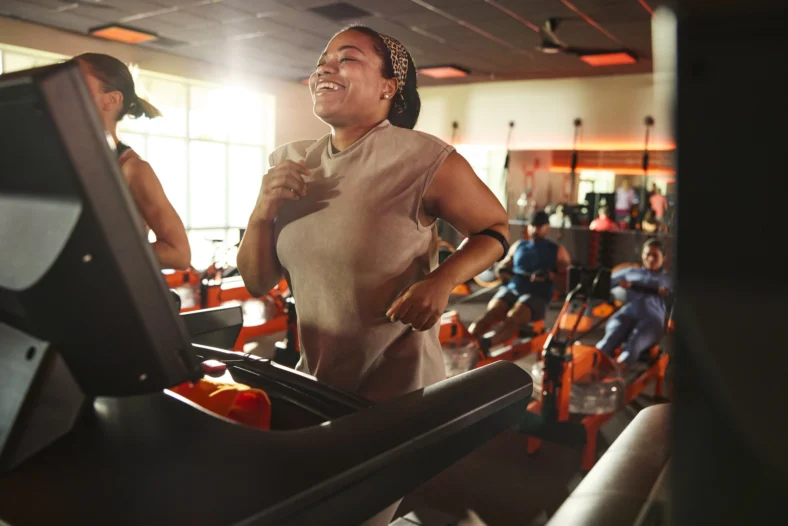
In terms of marketing, there is supportive data available. Look no further than social media: research from the University of Dayton and the University of Oregon found that hyper-attractive fitness influencers tend to have lower engagement compared to more relatable ones.
Some fitness brands have already started making changes. Orangetheory launched a campaign last fall featuring unfiltered stories from their members, intentionally moving away from what Purpose Brands senior vice president David Chriswick referred to “the airbrushed version of fitness the industry keeps pushing.”
Xponential Fitness-owned Club Pilates made a similar move with its first national campaign, “Every Body Club Pilates,” which put real members front and center of a push promoting body, age and ability inclusivity last year.
Women-Only Fitness Spaces Gain Ground
The white paper doesn’t shy away from one of the thorniest parts of the debate: women-only spaces, though it’s quick to note that many women prefer (and even thrive) in mixed environments.
Still, Total Fitness’ own findings from The Women’s Gym — a women-only concept launched at two of its locations — are hard to ignore. Nearly half of members, 48%, were not active gym members before joining. Among those who had previously belonged to a gym, 31% had been out of the system for more than five years. Another 20% had never belonged to a gym at all.
The primary reason for joining was comfort, cited by 76% of members, followed by safety or harassment concerns (23%) and religious or cultural reasons (22%).
Members reported feeling less self-conscious, more willing to try new equipment and better able to focus during workouts. One standout finding was that before joining, 22% of members reported doing no physical activity in a given four-week period. After joining, the figure fell to 1%. Consistent participation also rose from 14% to 48%.
The concept now has a waiting list.
In the U.S., some operators have long acted on the demand for women-only spaces, provided they are legally allowed.
Last month, Tension soft-launched as a women’s-only strength training studio in Brooklyn’s Williamsburg neighborhood, branding itself as the only such facility in New York City.
The Edge Fitness, a multi-state gym chain, offers private women’s training studios with female trainers — but not in Connecticut, where a 2022 court ruling found that women-only sections violated state anti-discrimination laws. A subsequent attempt to address it through legislation (Connecticut’s SB 399) recently fell short, according to News 12 Connecticut.
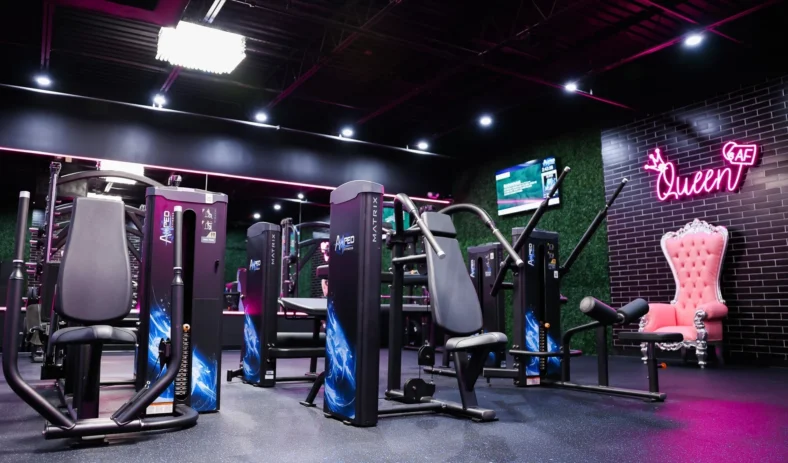
In the high-value, low-price (HVLP) space, Amped Fitness, which recently received a strategic investment from Princeton Equity Group and is gearing up for growth mode, offers Babe Caves, a women-only workout space.
Curves, the women-only fitness chain that was a household name in the early 2000s, is experiencing a revival. The brand is now expanding franchise opportunities across the U.K. and Europe as demand for women-only environments grows.
“Over the past few years, women have become far more intentional about where they work out and how safe, supported and seen they feel in that environment,” Curves chief operating officer Joanna Dase told Athletech News. “What we are seeing now is not simple growth, but a meaningful change in what women want from their fitness journey.”