These apps and monitoring devices are key for fitness professionals and devotees to maintain the right workout cadence
This story is part of “The Stack,” a weekly column that takes a deep dive into the ways tech companies are shaping the future of fitness and wellness
This week, we have the second in a series of columns that unpacks what technology and innovations industry professionals and fitness devotees use in their routines.
Here, we spotlight a dermatologist who turns to advanced compression technology for post-workouts, an Olympian who is a self-proclaimed data junkie and two fitness enthusiasts who leverage apps to stay on track.
Dotsie Bausch is an American former cyclist and an Olympic silver medalist. She is also the executive director of the nonprofit Switch4Good, which is an athlete-driven nonprofit working toward a dairy-free future.
Bausch told Athletech News that training for the Olympics takes a massive toll on the body.
“Getting granular with my recovery was a key component to standing on the podium,” she said. “I became a data junkie real quick, upon recognizing how much feedback was possible on my repair, rest, output and energy stores. I wasn’t much of an app user, as I find them to be more general in the feedback they provide, and I need ultra-specificity. Not only does every split second count in my discipline but every bite, every REM cycle, every assessment.”
She said one app that is unique in its specificity is the Masimo Personal Health app, “as I am a big believer in measuring O2 saturation, and these guys/gals are the best in the business.”
Regarding hardware, Bausch said in cycling, athletes have been able to gather and calculate data since the early 2000s via the SRM Training system device.
“They set the gold standard for cycling data collection and analysis long ago,” she said. “I used the SRM training system on my bike and the Zio for sleep data and a continuous glucose monitor for glycogen replenishment and loading.”
Targeting Inflammation & Repair
Dr. Eleonora Fedonenko, a dermatologist at Your Laser Skin Care in Los Angeles, specializes in non-invasive cosmetic methods and said she has spent “decades researching the connection between inflammation, tissue repair and circulation on not only muscle tone but also on visible aging. I use the same accuracy when it comes to training and recovery in the gym.”
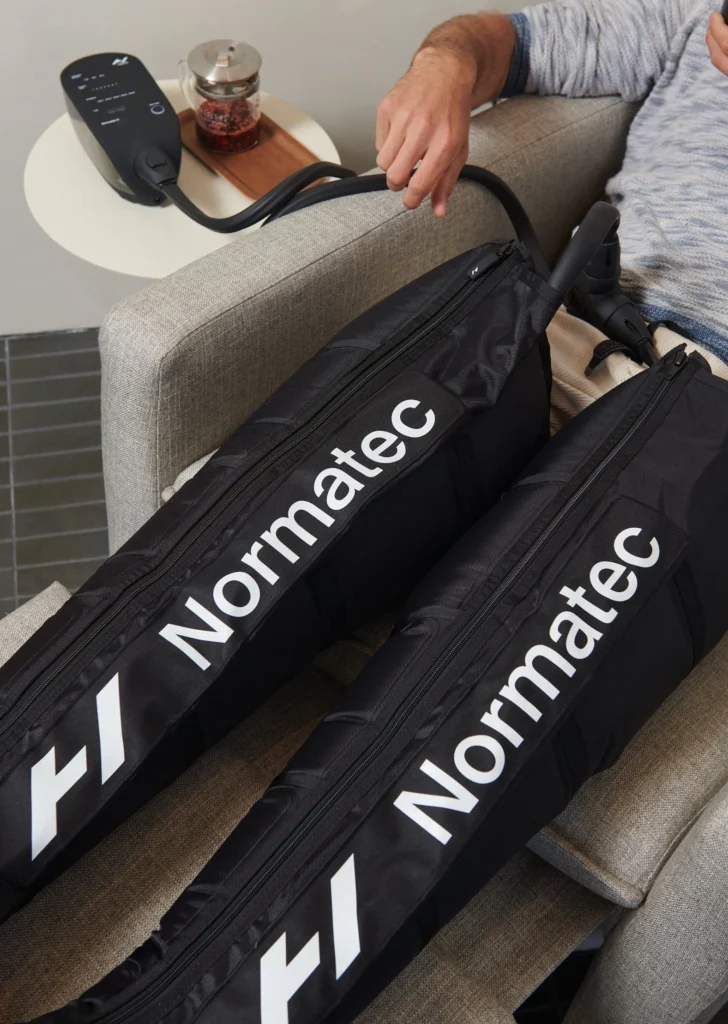
“NormaTec compression sleeves are my primary post-work three times a week after exercising the lower body,” Dr. Fedonenko said. “I use the intensity level 3 and maintain each session to be 15 minutes. That compression has efficiently decreased fluid retention after the exercise and has never over-compressed.”
“I measure the difference with the help of a soft tape and my calf remains a half-inch thinner even the next morning,” she added. “Any amount of swelling will make the muscles soft and the skin puffy. It is better than most supplements I have observed being peddled in wellness areas as recovery tools that can help manage that.”
On the hardware and monitoring side, Dr. Fedonenko said instead of wrist trackers that everyone is using, “I use the Polar H10 chest strap, which gives real-time data and does not suffer from accuracy loss during heavy movements or sweating.”
“I also use the phone to track recovery because my training involves supersets with little rest between them,” she noted. “This has assisted me to reduce the 90-minute workouts to 65 minutes, but with the same intensity. That consistency matters not only in terms of strength but also in how it looks, how tight and lean the body looks.”
Maintaining the Right Cadence
Daniel Vasilevski is the owner and director of Pro Electrical in Sydney, and he has a strong focus on fitness. Though his job requires a lot of work, “I am determined to maintain a balance in my workout regimen,” he said. “As a business owner, I have realized the significance of dealing with stress and ensuring that I have sufficient energy levels.”
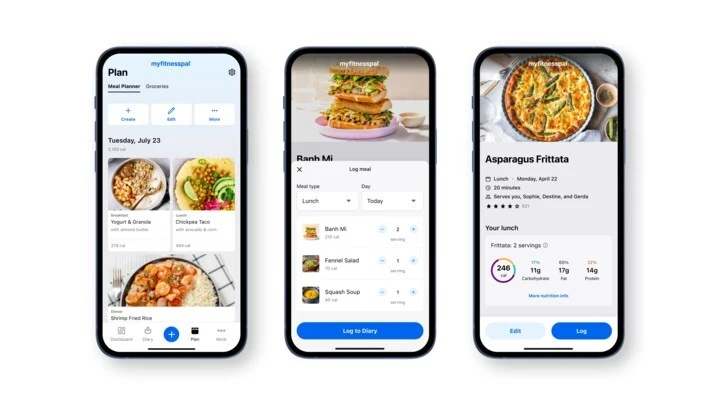
“I use such fitness applications as MyFitnessPal and Strava to monitor my nutrition and performance,” Vasilevski explained. “These instruments will assist me in making concrete goals and being accountable. MyFitnessPal enables me to track my meals and count the number of calories, which is essential to keep my energy levels during the day. Strava, in turn, allows me to reveal the details of my cycling and running activities that help me work on my stamina.”
Regarding wearable devices, Vasilevski’s arsenal includes a Fitbit Charge 5 that tracks his heart rate, sleep and activity levels throughout the day.
“Having a busy schedule, I use these technologies as a way to get the best out of my workouts and make sure that I am not wasting any of my time spent in the gym,” he said.
Vasilevski said these tools not only assist in monitoring his progress, “but also encourage me to go the extra mile and continue being a fit individual.”
Angela Tran, a public relations executive at Astrsk PR in New York, works out five times a week and also follows a meal plan. For her part, working with technology and a personal trainer is her path to success. Tan, who calls New Jersey home, works out at Signature Fitness, a well-known bodybuilding gym in Northern N.J.
The trainer is key in staying on target with her goals — but it also includes an app.
“I’ve hired a personal trainer in my area to help with my goals, and I follow a plan set by my coach through a platform called Trainerize,” Tan said. “From the app, my coach is able to set my workouts weekly (or monthly) to ensure I follow a good cadence for my workout for my personal goals of losing weight, as well as set a meal plan so I can be on a caloric deficit. I’m able to message my coach directly through the app and track my progress through the app.”
For inquiries and tips related to “The Stack,” please reach out to [email protected]