The Russell Wilson-backed self-defense fitness concept is formalizing a three-tier expansion strategy, including an option that allows gyms to open up a mini Pack concept inside their existing space
The Pack, a group fitness concept that blends self-defense training with strength and conditioning, has formalized its plans to scale through franchising, including a path that allows its concept to operate inside existing gyms.
The brand, founded by Rumble co-founders Noah Neiman and Andy Stenzler alongside Russell Wilson and Ciara, has introduced a three-tier studio model designed to support both domestic and international expansion.
While the company has yet to award any franchise licenses, interest has already come from independent operators, franchise groups and territory developers evaluating opportunities across multiple markets, The Pack says.
“Our focus has been building a system that can scale without compromising the integrity of the workout,” Stenzler said.
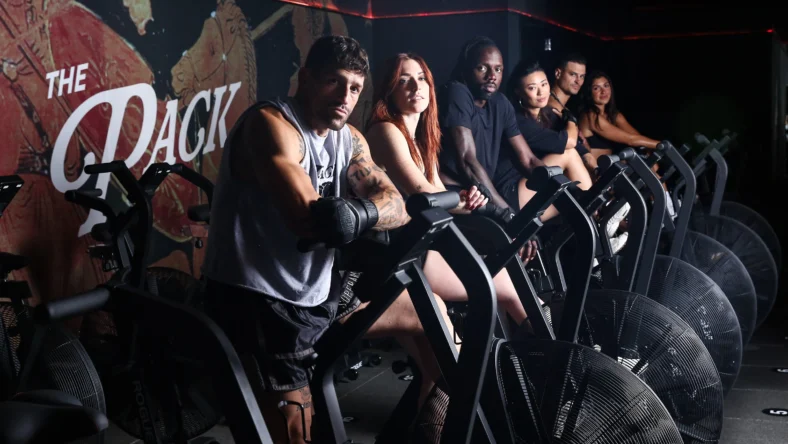
Opened in New York City last year, The Pack offers what it calls “Street Defense,” a class format that combines striking-based self-defense with strength and conditioning in an instructor-led group setting.
As it looks to scale, the brand has built its programming, equipment configuration and operating systems to be standardized across locations, even as physical footprints vary. To accommodate different real estate constraints and operator profiles, The Pack has outlined three distinct studio formats.
Pack Lite is designed as an entry point, allowing the concept to operate existing gyms or training facilities without requiring a dedicated lease. With roughly 30 stations and a footprint around 1,500 square feet, the model lowers upfront costs.
Pack Studio represents the core standalone format, typically spanning around 3,000 square feet with approximately 45 stations. These locations include retail components, positioning merchandise and apparel as incremental revenue streams alongside class-based memberships.
At the top end, Pack Flagship locations are built for scale and brand presence. These sites can reach 5,000 square feet or more, with up to 60 stations, expanded amenities such as locker rooms and showers, and a more developed retail environment.
Programming, instructor certification, operating systems and marketing support are all controlled at the corporate level.
“The strength of the model is its adaptability,” Neiman said. “Whether the studio is inside an existing facility or built as a flagship location, the energy, intensity and community experience remain the same.”