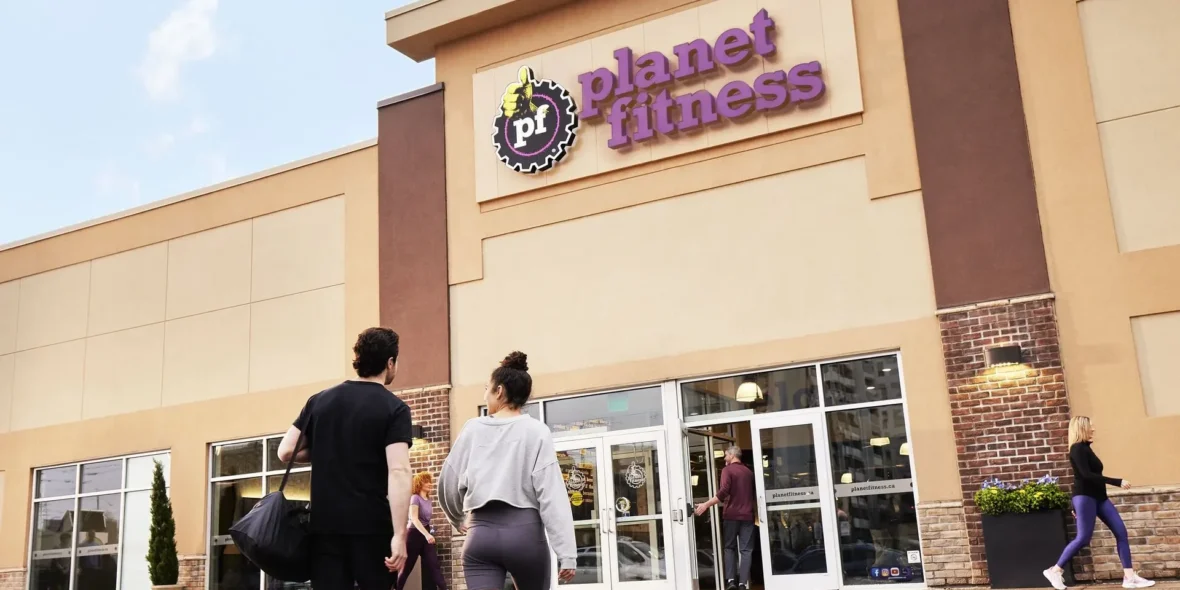
Planet Fitness CEO Colleen Keating sees a significant and largely untapped membership base taking shape as more people take weight-loss drugs
Planet Fitness posted stronger-than-expected earnings and revenue in the fourth quarter, but investors sent the stock down nearly 10% in Tuesday trading as low-price gym giant’s 2026 outlook pointed to a deceleration in same-club sales growth, from 6.7% in 2025 to a guided 4% to 5% this year.
Chief financial officer Jay Stasz pointed to two known drags on 2026 growth — an extended equipment replacement cycle and the sale of eight California corporate clubs last year.
“Transitioning these clubs from the corporate-owned segment to the franchise segment aligns with our asset-light strategy, yet reduces our revenue and profit year-over-year growth in 2026,” he said.
For 2025, Planet Fitness added 1.1 million net new members and reported $1.3 billion in full-year revenue (up 12.1%). System-wide same-club sales increased 6.7% and adjusted EBITDA jumped to $551.6 million from $487.7 million the prior year.
Notably, the growth came during the first full year after Planet Fitness raised its base membership Classic Card prices by 50% for new members, proving the resilience of budget-conscious gym goers.
Total membership now stands at 20.8 million across nearly 2,900 clubs worldwide.
Why Weight-Loss Drugs Might Be the Key To Gym Growth
Yet Planet Fitness sees a significant and largely untapped membership base taking shape, and it starts with GLP-1s. Boutique fitness and luxury operators diving into the weight loss medication space is hardly new, with gym-as-clinic models multiplying, but high-value, low-price (HVLP) operators haven’t quite waded into the GLP-1 pool — until now.
Planet Fitness CEO Colleen Keating pointed to survey findings commissioned by one of its franchisees that found roughly half of people who take a GLP-1 medication consider a gym membership. As GLP-1s become more accessible through lower pricing and pill formats, she sees a growing opportunity.
“We see positive indicators for continued growth and demand for our offering as GLP-1s become more accessible,” Keating told investors during Planet’s Q4 earnings call Tuesday morning.
Part of the positive outlook stems from Planet’s new Perks partnership with telehealth platform Ro, which offers GLP-1 prescriptions and counts tennis great Serena Williams as brand ambassador and client.
The collaboration, part of Planet’s members-only Perks initiative, has delivered what Keating described as the most successful program in the company’s history, citing high download and conversion rates, though she noted it is still in its early days.

It’s an area where Planet’s “Judgement Free” ethos and low membership pricing can shine, especially for those stepping into a gym for the first time.
Keating described the arrangement as mutually beneficial, giving Ro exposure to Planet Fitness members while offering them discounts and access to Ro’s services.
“For the GLP-1 user, we are perfectly positioned to meet that customer,” Keating added.
The Gen Z Long Game
If the GLP-1 push is about capturing a new demographic, the company’s High School Summer Pass program is about something longer term: building brand loyalty with a fitness-focused generation.
The 2025 Summer Pass program “yielded our most successful results to date,” Keating said. The program saw more than 3.7 million teens completing over 19 million workouts, with 8.3% of participants converting to paying members at the program’s conclusion.
Planet Fitness said it amplified the program’s reach by leaning harder into influencer marketing and social media strategies targeted to younger consumers.
Recovery Goes Budget
Perhaps the most telling detail from Tuesday’s call was Keating’s mention of new Black Card amenities currently in test at select corporate-owned clubs. She noted she personally visited several locations in January to try them, including a dry cold plunge and a red light sauna.
Member feedback was “resoundingly positive,” she said. “It’s our opportunity to democratize recovery and wellness, just as we did with fitness 30 years ago.”
The amenities test is still at an early stage, with no timeline or rollout scale announced.
A Black Card price increase is also on the horizon, which will bump it from $24.99 per month to $29.99. The higher membership tier offers members guest passes and access to its Black Card spa, which offers HydroMassage Beds, massage chairs, red light therapy and tanning booths.
Looking ahead, Planet Fitness expects to open 180 to 190 new clubs in 2026, with revenue growth of approximately 9%.