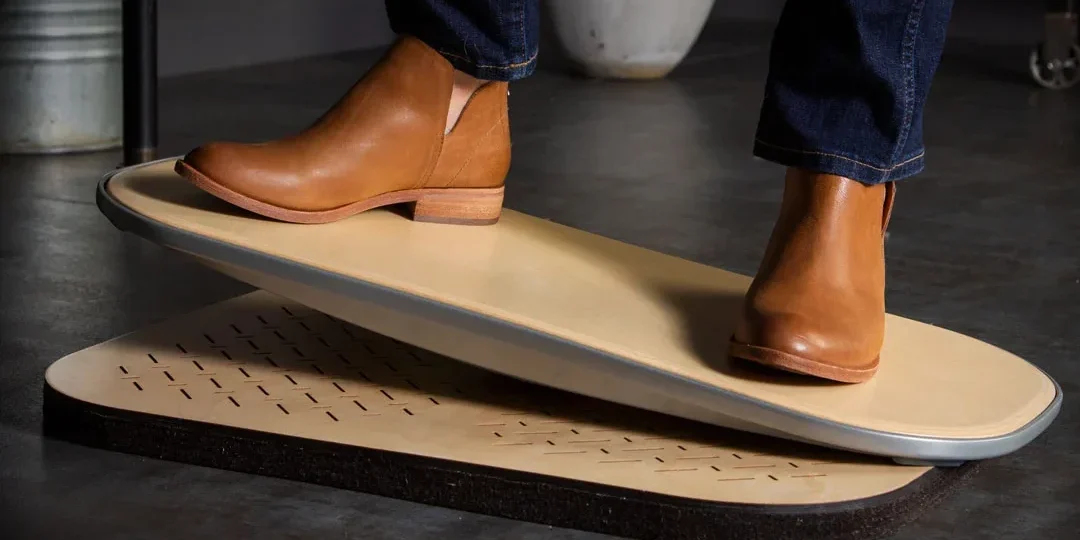
FluidStance makes the case—literally—for balance in the workplace as the ultimate tool for productivity and well-being
Sitting has been called the new smoking, and as wellness infiltrates every corner of our lives, it’s no surprise that standing desks have become a fixture in modern offices. However, research suggests they may not be the end-all, be-all solution they’re often made out to be, with one study finding that prolonged standing doesn’t significantly reduce cardiovascular risks.
So, what’s a wellness-focused company to do? And how can employees stay active while they work?
As with many of life’s biggest questions, the answer lies in balance—an area FluidStance founder Joel Heath knows well. His approach combines balance with micro-movements—small, consistent shifts in posture that keep the body engaged—delivered through FluidStance’s flagship product, an eco-friendly Balance Board designed to promote a flow state. While the boards are suitable for a standing desk, they are designed to add movement to any space, from the office to the classroom.
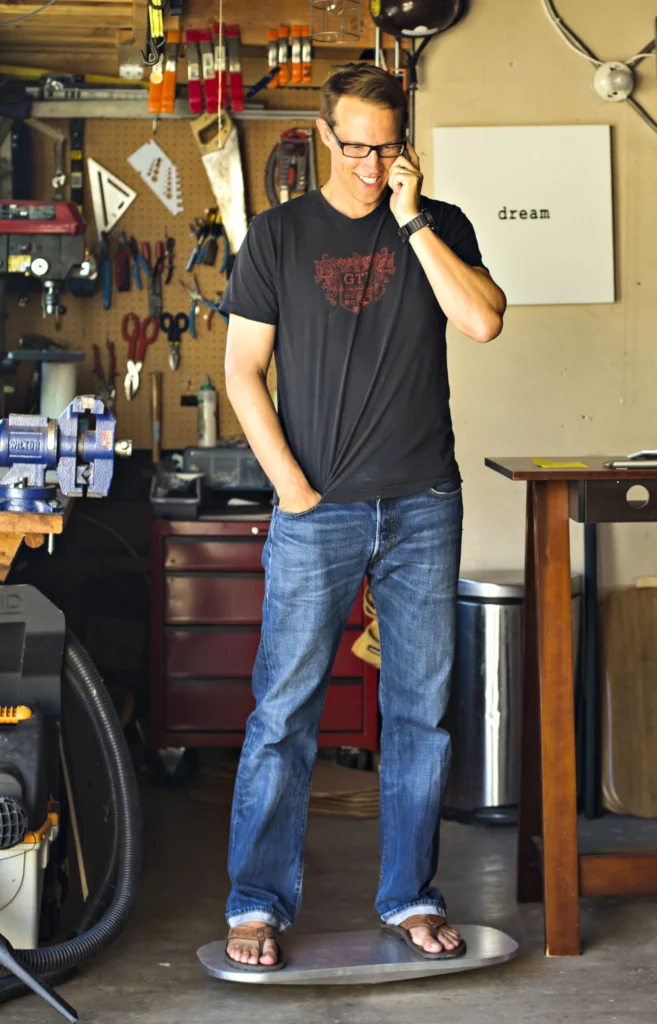
Micro-movements are the “secret sauce” to staying engaged, Heath says—not just physically, but mentally—fueling creativity and productivity, both essential for a successful workday.
“The human body was built to move, not to be static,” he points out. “When we introduce subtle shifts in balance, we engage stabilizer muscles, improve circulation and keep our energy levels up. But beyond the physical benefits, movement is directly tied to creative thinking. Studies show that even small motions can increase cognitive function and problem-solving abilities. Movement helps unlock flow states—the moments when ideas come easily, and focus sharpens.”

New users to the balance boards are encouraged to use a 70:20:10 routine (70% of the day sitting, standing on the deck for 20% of the day, and using 10% to engage in real-life movement) and progressing toward an even balance of sitting and standing. Those who are used to standing for longer periods of time can integrate the board into their usual routine.
When it comes to mental well-being—another focus area for companies in the age of wellness—movement is one of the most underrated tools, he adds.
“A static body often leads to a stale mind, and prolonged sedentary time has been linked to higher stress, anxiety and even depression,” Heath says. “When you move, even subtly, you increase oxygen and blood flow, which can improve mood, reduce stress hormones and sharpen focus. It’s why some of the best ideas don’t come when staring at a screen but rather when exercising, stretching or engaging in some form of motion.”
Recognizing the seismic shift toward workplace wellness, Heath notes that it has become an expectation rather than a perk—and companies that fail to invest in it are already falling behind.

“If employers treated human performance the way they treat their machines, they wouldn’t hesitate to make small investments to boost efficiency, longevity or even environmental impact,” he points out. “Yet, we often prioritize the maintenance of inanimate objects over the well-being of our people. The case for movement at work is clear: healthier employees are more engaged, productive and happier. Creating a culture that encourages movement isn’t just about wellness; it’s an investment in long-term energy, focus, creativity and, ultimately, business performance. The ROI is in productivity, retention and a more dynamic workplace culture.”
For companies warming up to the idea, Heath advises starting small—but in a meaningful way.
“You don’t need to overhaul your entire office overnight,” he says. “Introduce movement-friendly tools like balance boards, standing desks or walking meetings and gamify as much as possible—because what you measure is what you get. Encourage employees to take movement breaks—whether it’s stretching, a quick walk or simply shifting work positions. The key is to build movement into the work culture so it becomes second nature. The best work happens when people feel good, and movement is a major part of that equation.”
Looking ahead, Heath says FluidStance is set to introduce innovations that make movement at the desk even more intuitive, playful and engaging while also deepening partnerships with like-minded companies focused on workplace performance.
“Performance isn’t just about movement—it’s also about recovery,” he points out. “Just like athletes prioritize rest and recovery to improve their next workout, we believe professionals need to approach downtime with the same level of intention. Our latest innovation is designed to help people unplug and reset, creating space for true recovery so they can return to work recharged and ready to perform. It’s not just about how you move during work—it’s about how you recover outside of it.”