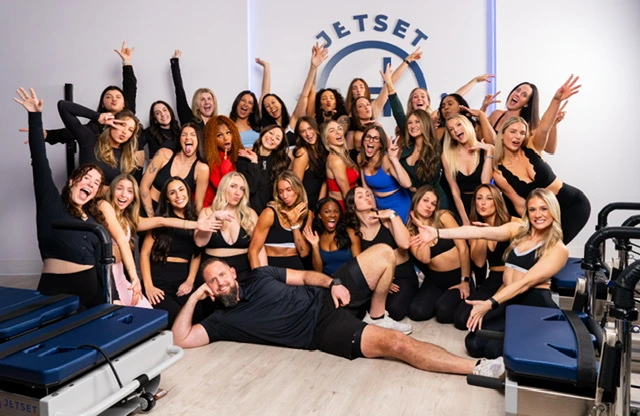
From a single standout studio to a multi-unit operation in under a year, Kayla and Ben Logue show what it takes to scale a boutique fitness franchise without compromising experience, culture or standards.
In competitive boutique fitness markets, growth often comes with a tradeoff. Expand too quickly, and the experience suffers. Hold the line on quality, and scale can feel slow or risky.
Kayla and Ben Logue are proving you don’t have to accept that compromise.
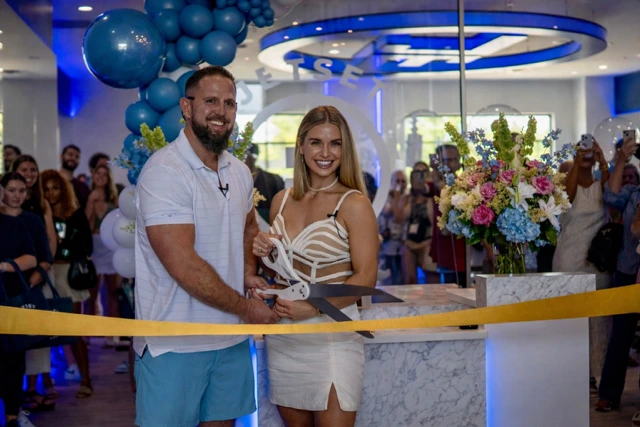
As franchise owners of JetSet Pilates Lake Norman and the newly opened JetSet South End in Charlotte, the husband-and-wife team has built two high-performing studios in rapid succession, without diluting the culture, energy or elevated experience that define the brand.
Their approach offers a clear lesson for franchise operators: scale doesn’t fail because systems are missing. It fails when culture, leadership and experience aren’t treated as systems themselves.
Experience Is the Product
For Kayla, the appeal of JetSet was immediate.
“It really is different,” she says. “The DJ-driven custom playlists, the lighting, the energy, the intentional sequencing, nothing else blends strength, rhythmic flow and variety the way JetSet does.”
But what ultimately sold her wasn’t just the workout.
“When you’ve been in this industry long enough, you realize you can be the best part of somebody’s day,” she says. “That’s how JetSet feels. It’s built from the ground up to feel different for members, and for the team.”
That belief shapes how the Logues operate day to day. They are deeply involved owners, instructing classes, taking classes, walking the studio floor and staying closely connected to both members and staff.
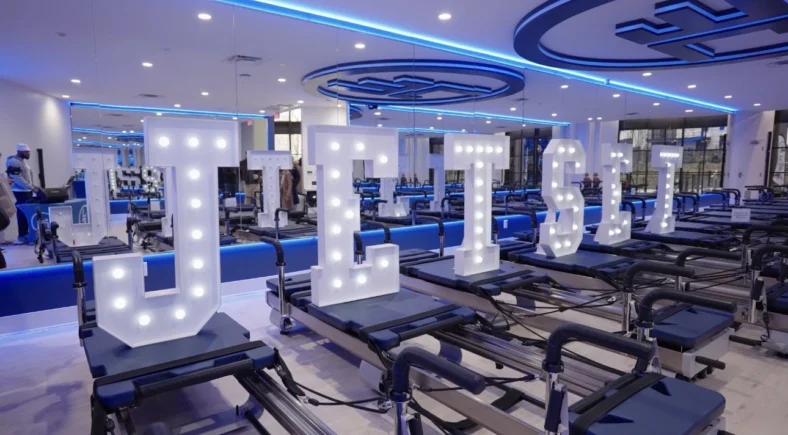
“We’re obsessive about protecting the experience,” Kayla says. “We review classes. We’re on the floor. We make sure the studio is white-glove clean. If something doesn’t align, we refine it, replace it, or remove it. That’s how quality scales.”
Class size caps, studio flow, instructor presence and cleanliness aren’t left to chance. They’re monitored constantly – not as a checklist, but as a shared standard.
“As owners, nothing is beneath us,” she adds. “We fill all different roles, and that visibility matters.”
Community Is Built by Design
In crowded boutique fitness markets, community is often the real differentiator – and it doesn’t happen by accident. At JetSet Lake Norman and South End Charlotte, connection is treated as a core part of the experience, not a byproduct.
“We’re community people. We invest in connection,” she says.
That focus translates into an experience members can feel the moment they walk in the door.
“From the social presence to instructors knowing your name, it’s intentional,” she says. “You come in for an amazing workout, but you stay for the connection.”
The same philosophy applies to talent.
“The workout and the brand push creativity,” Kayla explains. “Every workout is different. It gives instructors a platform to grow.”
JetSet’s structure supports that growth, too. As franchisees open additional locations, instructors can move into leadership and management roles, creating a visible career pathway inside the brand.
“We operate at a high level, and the people we attract want to do the same,” she says. “That translates directly to the member experience.”
She says running two studios requires discipline and processes.
“Everything we do operationally focuses on strong systems,” Kayla says. “From onboarding instructors to onboarding members to overall studio flow, consistency protects the experience.”
That consistency shows up in predictable schedules, aligned communication and clear expectations across both locations.
“You can’t thrive in chaos,” she says. “Clarity and communication are everything.”
A key part of that system is JetSet’s instructor development model. “We recruit for character first and talent second,” Kayla explains. “Heart, professionalism and work ethic matter. Personality matters as much as technical skill.”
Once hired, instructors are supported through ongoing training and mentorship.
“We have a lead instructor role that evolves with the needs of the studio,” she says. “It provides coaching, follow-up and accountability. It helps instructors grow, which helps the studio grow.”
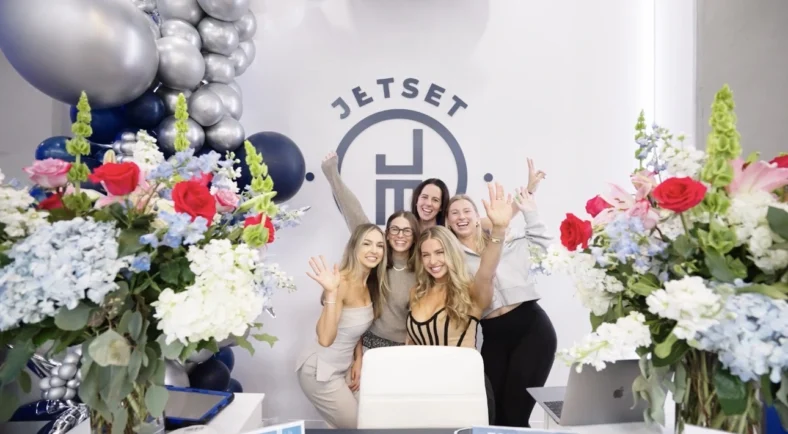
A Solid Model Simplifies Scaling
Opening a second JetSet location wasn’t about momentum for momentum’s sake.
“Our first studio proved the model worked,” Kayla says. “We had a strong P&L, a healthy membership base, and incredible presales. The flywheel was already going.”
The second studio, just 20 minutes away in South End Charlotte, benefited from that foundation.
“People already knew JetSet,” she says. “The demand was there.”
Just as important, the expansion felt intentional.
“We weren’t expanding for the sake of it,” Kayla adds. “When the foundation is solid, scaling becomes strategic, not stressful.”
Member loyalty played a central role: “You see it in the testimonials. It becomes a snowball effect. When you operate something you deeply care about, people feel it, and momentum follows.”
Kayla believes JetSet’s edge comes from understanding what today’s consumer is actually buying.
“People don’t buy workouts,” she says. “They want efficiency, design, depth and a luxury feel at an accessible price. They want results — and they want to feel part of something.”
For Kayla, the biggest personal shift in moving from one studio to two was learning to let go without lowering standards.
“I like to have a lot of control,” she admits. “The hardest part was moving from doing everything ourselves to empowering leaders to run the brand at the same level.”
That meant redefining leadership.
“Multi-unit success is about people, processes and culture,” she says. “You have to develop leaders who can operate at your standard and make hard decisions when someone can’t support it.”
Looking back on a whirlwind year, from signing their first lease to opening their second studio in just 12 months, Kayla offers simple advice to other operators.
“Fear is the one thing that holds people back from getting started,” she says. “Trust yourself and do it.”