By creating blueprints for dedicated glute workouts, Precor is handing gym owners a powerful tool for designing specialized strength training areas that pay big dividends.
These days, gymgoers know exactly what they’re looking for, whether it’s the workout itself, the results they garner or the vibe of their surroundings. The gyms that can deliver on that trifecta are more likely to attract more members for longer. But knowing what needs to be done is a far cry from understanding how to get there. That’s where commercial fitness equipment leader Precor steps in. The company has developed a guide to help elevate gym facilities and exercisers’ experiences.
The Precor Glute Zone Guide is a valuable handbook designed to walk owners and operators through how they can capitalize on the current focus on lower body workouts with an area customized for their gyms and their members. The guide highlights each piece of equipment focused on glute, hip and quad strength, calling out individual benefits like strength, shaping, power, and sculpt. It also shows precise placements to maximize how they work together in the space.
Ultimately, the proposed setups allow gymgoers to achieve results with the least amount of friction. For gym operators, the dedicated set up not only optimizes floor space, it also boosts engagement. The psychology behind the Glute Zone is simple.
“People like to train with people who are like minded. It feels good to be in a space where people are supported and working towards a goal,” said Erica Tillinghast, Precor’s Vice President of Marketing. “It’s very motivating, it’s welcoming, and it creates a sense of confidence, continuity and community that people crave.”

That need for camaraderie represents an opportunity for gyms. Despite the plethora of at-home and on-the-go workout options today, gyms that give people a sense of belonging will continue to draw people through their doors. And given the popularity of strength training, Tillinghast said, creating an inviting glute area that corrals members in one place is an ideal place to start.
The Building Blocks
While owners and operators may intuitively understand the reasoning behind the concept, the idea of overhauling their gym floors might seem daunting. But Tillinghast said building the ideal space can be an incremental process. And the first step is to assess which pieces could provide the biggest payoff—both for you and your members.
“Start small and grow. And select pieces of equipment that might be your hero pieces at the beginning, so you really understand what your exercisers are asking for and what’s going to be the most utilized,” she said.
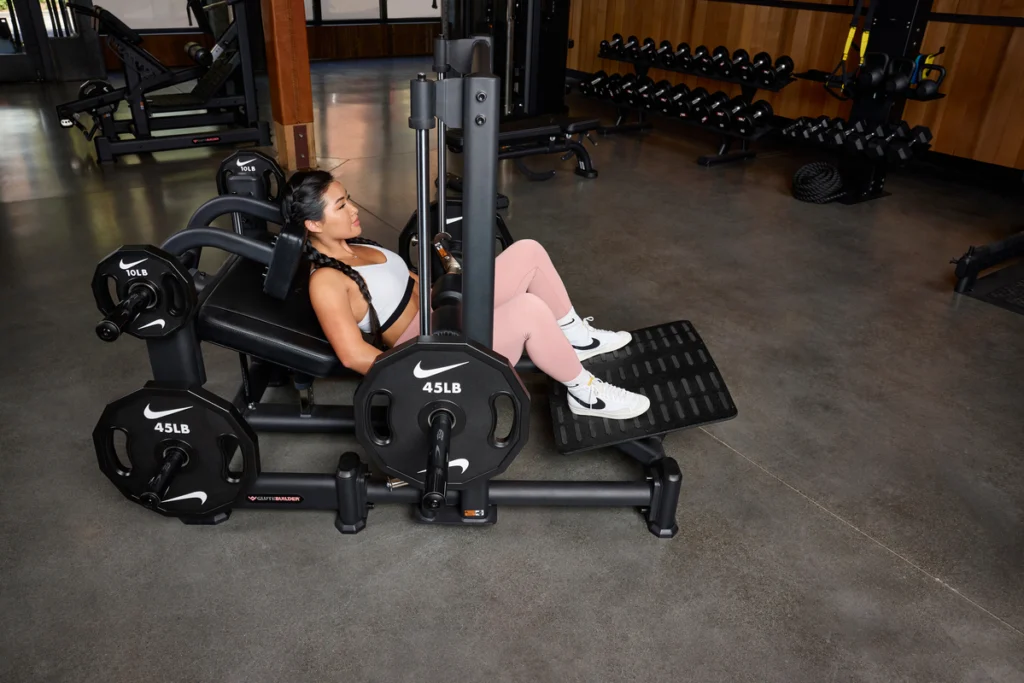
For many gyms, three pieces of glute equipment rank as the most used and most loved by gymgoers. The Hip Thrust Elite, which the Glute Zone Guide shouts out as an MVP, is like a Smith Machine for the hips, because it not only goes up and down, but it also slides side to side, so it follows a natural curve of the body as you go through each motion.
“We’ve found the Hip Thrust Elite has by far been the most popular, because it’s an exercise that most people who are strength training are doing today, whether they’re leaning off a bench or they’re even doing it off of the floor with a barbell,” Tillinghast advised.
Add that piece of equipment in with the 3D Multi Abductor, which works the outside of the hips, and the Dual 45 Hip Extension, which allows for a traditional back extension movement that isolates the glutes, and you’re well on your way to curating pieces for a dedicated space that delivers.
For facilities with larger spaces or the ability to invest more deeply in glutes specifically, the Glute Zone Guide offers layouts for two fully equipped areas.
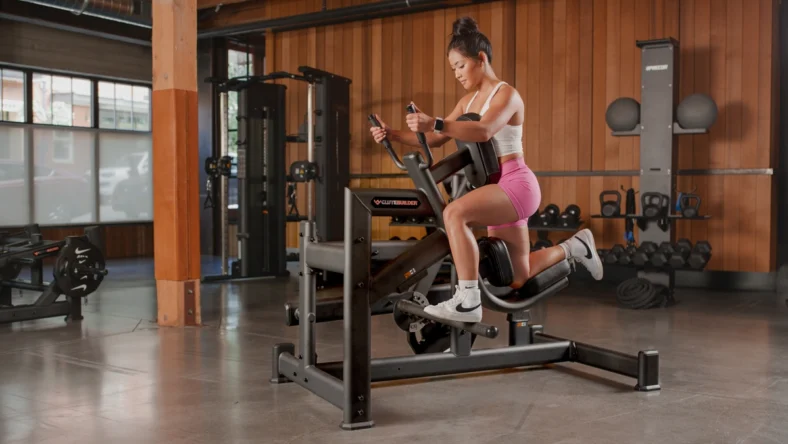
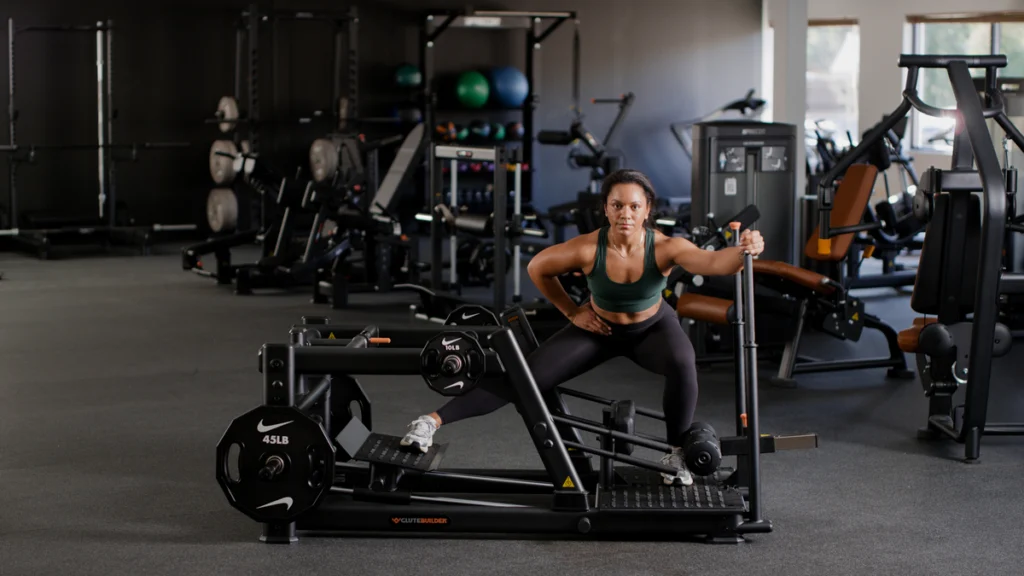
The Glute Focus Zone is designed to maximize different angles of glute, hip and leg muscle activation. In addition to the Hip Thrust Elite, the selection includes the Pendulum Kickback, which is a kneeling biomechanically precise exercise that Precor says provides a feel-good burn; and the Glute Lunge, AKA the One-Leg Wonder, which is compact yet powerful.
In all, there are 11 pieces to choose from, each with its own benefits that gym owners can mix and match according to their members’ needs. In the event that a gym can go all in, a Glute Focus Zone illustration shows the ideal way to position the pieces in proximity to one another.
The Glute Performance Zone layout features 10 pieces of equipment that provide a mix of strength and cardio. With this scenario, gym owners can build out a space for anything from steady-state recovery to integrated HIIT programs on StairClimbers and Adaptive Motion Trainers®. It’s ideal for gymgoers who are looking for a well-rounded workout that builds glute muscles but also increases endurance and fat burn.
Again, the anchor for the space is the Hip Thrust Elite, which sits in the middle with the other equipment radiating around it. That paired with the so-called heavy lifter’s favorite, the Deadlift Elite for posterior chain power; and the StairClimber and you have a great start at a strength-cardio assortment.
“We wanted to incorporate cardio into this space for warm ups, intervals and as a cardio hit that’s emphasizing the area of the body that is of interest to the people that are training in that environment,” Tillinghast explained.
The Floor Plan
Whether a gym has just a few machines or the full slate of equipment, Tillinghast said the key to maximizing the investment is placement. “It’s about intentionally selected pieces and positioned on the right area of the floor that’s going to attract the right type of exercisers,” she said. “You don’t want to put it all the way in the very back of the club where it’s hard to discover.”
Equally as important as the placement of the Glute Zone itself is how each piece is positioned. This will play a role in how members interact with them and whether they find them inviting.
Tillinghast said the Precor team can help gym owners and operators think through which pieces should be in proximity to one another. An ideal layout will lead users around the room in a logical path. Similarly, she said they’re experts at advising on which pieces should be placed against walls in order to provide a level of discretion for exercises that require a more compromising body position.
Large or small, once the zone is set up, gym owners might be surprised by the reception. “It’s been interesting over the last two years to see that exercisers are much more sophisticated than we originally gave them credit for,” Tillinghast said. The result is that they come in ready to go and they’re not intimidated by the equipment. “In the glute space, people do their homework.”
Thanks to Youtube, TikTok and Instagram, gym members are motivated to focus on glutes. QR codes on each machine provide tutorials at their fingertips to learn how to use the equipment and the ideal movements for each. “And once they become part of the community and the culture of a facility, people are watching each other, and they’re learning and understanding through observation,” she said.
Given the reception to the Glute Zone Guide, clearly Precor has struck a nerve. The company says it plans to offer more tools that address other areas and modalities within the gym to help owners create facilities members want to return to for both results and kinship.
“The layouts in the guides are driving people into a supportive environment and an optimized environment to do that exercise,” said Tillinghast. “It also helps exercisers feel like they have a place they can go in the facility, a place they can look forward to for their workouts.”