The leading fitness equipment supplier uses thoughtful floor design to attract and retain target members
The moment a new or prospective member walks onto a gym floor, the clock starts ticking. In less than a minute, they’re scanning the space and wondering if it’s serviceable, spacious and worthy of their investment.
While operators might focus primarily on factors like equipment functionality, modality demand, energy usage and safety, these first impressions matter too. Setting up a clean, open and thoughtfully curated gym floor that captivates and comforts fitness consumers is vital to bringing in new ones and retaining those current.
And while that’s news to some, it’s common knowledge at Life Fitness/Hammer Strength, a leading fitness equipment vendor. By keeping a close pulse on the industry, the brand is eager to not only supply gyms with the equipment they need, but tell their story in a physical sense.
“Each choice communicates something about the brand,” said Ian Rushbury, Life Fitness’ International Customer Experience & Training Manager. “Ultimately, the first 60 seconds set the tone for atmosphere and belonging.”

Post Pandemic Evolution
Like many others, the fitness and wellness industry shifted its collective tendencies after the COVID-19 pandemic. When it came to floor construction, lockdowns gave operators the chance to step back and rethink spacing, cleanliness, coaching and overall health. They took advantage, shifting their emphasis from “how much can we fit in one space” to member movement throughout the area and experiences within it.
“We’re seeing a return to thoughtful zoning — organized by muscle groups or machine types — which supports workout efficiency and convenience in our time-poor modern day lives,” said Rushbury. “More importantly, design now acts as a storytelling tool; it reflects the facility’s brand values and training ethos. Ultimately, members aren’t just buying access to equipment — they’re buying into the story and identity of your gym.”
Still, within this wave of progress, uniformity can quietly undermine differentiation and success. Things like a concierge-style greeting vs a minimalist approach, recovery zone or even merchandise location all bear consideration based on your member or potential member demands.
“The layout should be designed with your ideal customer in mind,” said Rushbury. “Not every gym can — or should — appeal to everyone. The goal is to design a space that speaks directly to the type of member you want to attract.”
Life Fitness and Hammer Strength’s Approach
Understanding that vision requires more than instinct. Ensuring a floor becomes a physical expression of a gym’s identity requires deliberate alignment forged over time and through collaboration.
“First and foremost, we are listeners,” said Rushbury. “Before any planning session, we research the customer thoroughly — reviewing the brand, number of gyms, history, and, in most cases, visiting the facilities ourselves, either as walk-ins or by doing a workout.”
Rushbury noted this process typically involves a 45–60 minute conversation featuring questions that pertain to an operator’s future vision for their club, experiences they want to facilitate or specific member personas, demographics or price points they want to target. Doing so allows Life Fitness/Hammer Strength to visualize the end goal for each respective brand and begin building toward it.

“The key then is to listen, capture insights and begin shaping a design that aligns with their mission and ideals — matching products and spaces from our Life Fitness and Hammer Strength portfolio to bring that vision to life — and truly capturing that vision in the actual product, mix and persona of the gym floor,” Rushbury said.
This careful process also helps Life Fitness/Hammer Strength avoid the common snares gym operators run into when setting up their spaces alone. Rushbury noted that adding new equipment without considering its fit in an existing space is one of the most frequent mistakes he finds himself fixing today.
“For example, it’s creating a glute or lower body zone, or a chest machine area, but placing them so that users end up facing each other, or the mirrors are angled awkwardly,” Rushbury said. “This can make the environment feel more like a showdown than a workout, and it happens more often than you’d think.”
Life Fitness/Hammer Strength also makes sure to address the things that may seem little at first, but go a long way in the end.
“You can always tell a well-thought-out gym space by how lighting highlights the features of the facility — the legacy elements, the brand walls and the ‘Instagrammable’ moments,” Rushbury said. “In these cases, my own 20 years of running gyms help me steer the conversation. For less experienced sales team members, taking customers to see other gyms, hotels, or hospitality venues can also help them visualise how these design elements make a difference.”
Staying Adaptable
To establish functional floors in the gyms of tomorrow, Life Fitness/Hammer Strength plans to keep its ears and mind open, continuing to listen to clients and consumers alike.
“This largely comes down to the voice of the community you are trying to serve and the current member feedback you are receiving,” Rushbury said of adaptation. “Members are a great source of information for your gym and they are willing to offer suggestions for an improved design experience or a new piece of equipment for the gym floor.”
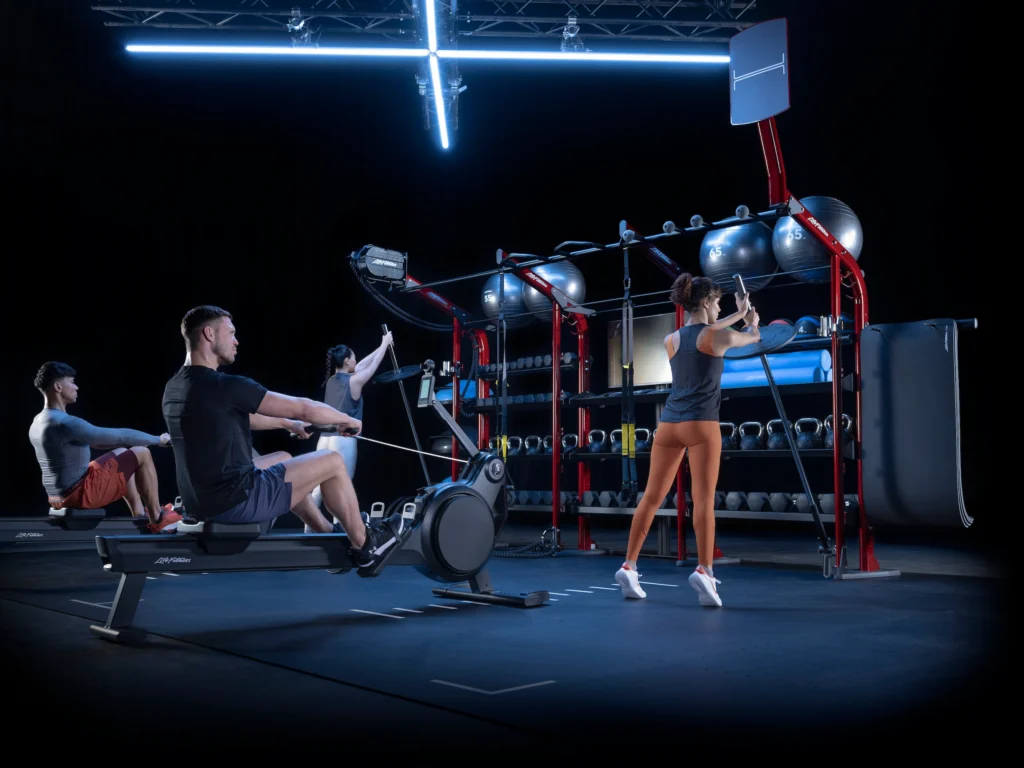
Life Fitness/Hammer Strength also conducts its own education, hosting training sessions and webinars for its sellers on trends, design and gym operations to point them in the right direction before they begin working with brands. It also conducts outside research, tracking consumer trends, gym designs, industry press and other areas of design.
“We could look at a premium health club, a multi-unit housing gym, a hotel gym or an independent gym,” said Rushbury. “The products we produce and develop take in all these variables to stay on trend and develop future trends. This ensures our customers choose the right product for upgrades or future-proofing their gyms against competitors and competing trends.”
This article originally appeared in ATN’s Fitness Center Reimagined: The Evolution of Gyms, Wellness Tourism & Real Estate report, which explores how health clubs, hospitality brands and boutique operators are reshaping the industry to meet shifting member expectations and lifestyle demands. Download the free report.