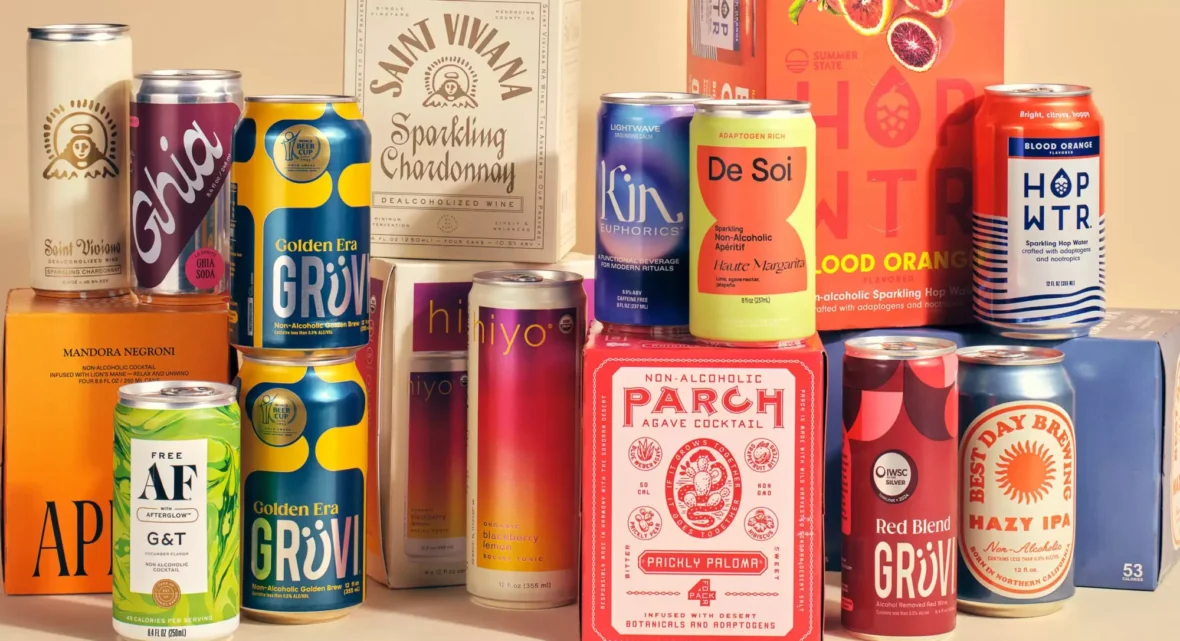
The online grocer’s decision to stop selling booze reflects shifting consumer habits and creates space for a bevy of new non-alcoholic drinks
It may be one of the biggest category decisions a wellness retailer has made in recent memory.
Online health grocer Thrive Market is exiting alcohol entirely, clearing its digital shelves to make room for a fast-growing universe of non-alcoholic drinks.
While the timing aligns ahead of Dry January, a month when many reset from the excess of the holidays, the permanence of the decision is hard to ignore, raising bigger questions about what lies ahead for wellness retail — or perhaps more importantly, what may be left behind.
There’s no shortage of conversation about Gen Z drinking less or trending recipes for magnesium-infused “Sleepy Girl” mocktails on TikTok. What’s rare, however, is seeing a retailer remove alcohol altogether. That’s what makes Thrive Market’s decision feel almost like a turning point, where alcohol has lost its assumed place in retail.
There were hints, of course. In an October blog post, Thrive Market spotlighted its favorite non-alcoholic picks from employees and members in celebration of Sober October, announcing plans to introduce more than 100 new options from brands such as Athletic Brewing, De Soi, Hiyo, Best Day Brewing and Free AF.
Americans Are Drinking Less
The data helps explain why. According to Gallup, just 54% of U.S. adults now report that they drink, the lowest level in nearly 90 years of tracking and the third consecutive annual decline. A majority of Americans now view even moderate drinking as bad for health, and among adults ages 18 to 34, drinking rates have fallen below those of older generations for the first time.
And if retail tends to follow consumer behavior, the non-alcoholic drinks category is becoming increasingly compelling. Spirit-free drinks can easily ship nationwide without regulatory hurdles and fit effortlessly into a longevity-focused culture already obsessed with supplements and functional beverages.
The shift is even reaching beauty retail. Ulta Beauty welcomed wellness brand Apothékary onto its platform last year as its first sober-curious product. The brand, which counts Solidcore founder Anne Mahlum as an investor, offers alcohol-free tinctures designed to ease stress or enhance mood.
How GLP-1s Might Be Changing Things
There may also be another force accelerating the shift. GLP-1 medications, which are reshaping how Americans eat, may also be changing how they experience alcohol itself.
A recent study published in Scientific Reports suggests drugs like Ozempic and Wegovy could slow alcohol absorption and dull early intoxication. In the small controlled trial, participants taking GLP-1s showed a slower rise in breath alcohol levels and reported feeling less drunk in the first minutes after drinking.
The study was limited, but it builds on earlier lab work and survey data suggesting GLP-1s may curb alcohol cravings.
NA Brands Gain Market Share
Opportunities for collaborations are also emerging across the category. Boisson has partnered with award-winning sommelier and winemaker André Hueston Mack to launch a subscription-based NA wine club, while Athletic Brewing, America’s largest non-alcoholic brewer, recently created Side Stage, a limited-edition brew, in honor of Vans Warped Tour.
Further solidifying that the non-alcoholic space is being taken seriously, Live Nation recently took an equity stake in non-alcoholic social tonic brand Hiyo and struck a multi-year partnership to roll the beverage out across select venues and festivals, citing data that most concertgoers now alternate between alcoholic and non-alcoholic drinks.
The takeaway isn’t that alcohol is going away, but that non-alcoholic beverages will continue to gain ground and retailers are likely to devote more space to NA brands, if they haven’t already begun doing so. If the current wellness-focused trajectory holds, fast-forward to the end of 2026, and decisions like Thrive Market’s may not stand out at all.