Programming, environment and culture intentionally designed to quiet distraction – rather than create it.
In an era defined by constant stimulation, the fitness industry has increasingly embraced immersive, experience-driven training. Big screens, gamification, mood lighting and digitalization reflect a broader shift toward environments designed to entertain.
For many consumers, fitness has become another extension of the attention economy.
MADabolic has built its identity around a different priority: sustained focus.
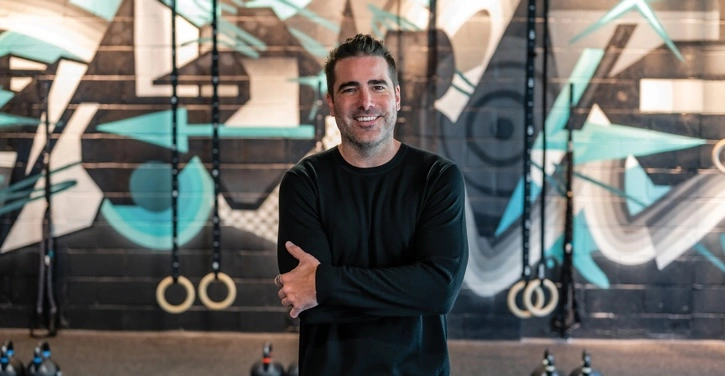
Co-founder Brandon Cullen and his team have introduced the idea of “quieting the noise,” — an intentional rejection of distraction in favor of structure, focus and progression.
“Noise can be different for everyone,” Cullen explains. “It can be external, such as work, family, daily responsibilities, or it can be internal like procrastination or self-doubt. And then there’s modern noise — social media, over-optimization, constant entertainment. To me, ‘Quiet the Noise’ means blocking that out for one uninterrupted hour you take completely for yourself. Strength and conditioning. Gritty music. And you go to work.”
The message is not meant to be dismissive of other models, it’s simply clear about what MADabolic is built to deliver: strength, structure and accountability.
“We often say, we are not here to entertain you,” Cullen explains. “We are here to train you.”
Focus as a Competitive Advantage
MADabolic’s consumer is typically performance-driven and results-oriented. Many are former athletes. Others are executives, entrepreneurs or professionals who approach their training with the same discipline they bring to their careers.
“We position ourselves to attract high-performing attitudes,” Cullen says.
Each day’s programming centers around five foundational movements. That structure allows coaches to provide detailed, individualized feedback within a group environment. Rather than overwhelming clients with complexity, the model emphasizes micro-improvements — small refinements in form, intensity and execution that compound over time.

“I think it’s becoming a lost art — attention to detail,” Cullen says. “We do that here.”
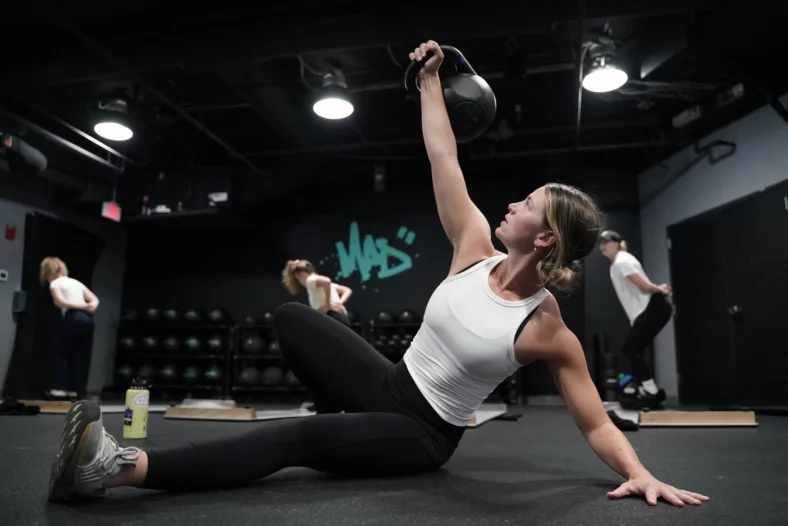
In a culture saturated with information and novelty, that attention has become increasingly valuable. MADabolic’s sessions are designed to minimize distraction. There is no choreography, no theatrical lighting and no rotating theme designed to create urgency. Members know exactly what they are coming in to do.
“Strength and conditioning,” Cullen says. “That’s it. When you come to see us, you know why.”
For some newcomers, especially those arriving from entertainment-forward boutique environments, the experience can initially feel different. Cullen describes it as a shift from stimulation to structure.
“Once they feel the results over 90 days and experience that less-is-more mentality, it’s difficult to unsee how we are different,” he says. “For the right individual, it speaks to them.”
Retention data reflects that alignment. While industry churn rates often hover near double digits monthly, MADabolic locations report significantly lower averages – an indication, Cullen believes, that discipline builds resilience.
Product First, Culture Follows
Cullen describes MADabolic as the “perfect place” for a certain kind of client, not the newest trend, not a short-term experiment, but a long-term training home.
“Instead of the flashy new nightclub, I want to be the neighborhood bar or coffee house,” he says, “A place that earns loyalty because it delivers consistently, year after year. It becomes part of someone’s routine, part of their identity.”
In many fitness models, community is positioned as the primary differentiator. MADabolic views community as a result of shared discipline.
“The way we flip the script is to focus on product first, and it builds a different type of culture,” he explains. “High-achieving individuals show up to train alongside other high-achieving individuals. The camaraderie and community is formed naturally from the mutual respect of the work being done.”
Cullen is careful to acknowledge that there is space for multiple approaches within the industry. He says entertainment-driven concepts or hybrid models serve many individuals well – it’s just not who MADabolic is.
“We aren’t going to start chasing trends just because that’s what’s selling,” Cullen says. “Sometimes it’s important to say no to things that aren’t aligned with the brand or the members.”
Cullen sees MADabolic’s philosophy as part of a broader cultural cycle, pointing out that in adjacent markets — fashion, hospitality and entertainment — analog trends are starting to surface. “I am seeing vinyl listening bars, cell phone–free restaurants and consumers seeking environments that protect attention rather than fragment it,” he says.

Fitness has evolved dramatically over the past two decades. Facilities are sleeker. Programming is more refined. Technology is deeply integrated. Cullen does not deny the role tech will continue to play in performance tracking and optimization, but he also believes there will always be value in a high-level, in-person training atmosphere that demands presence.
“I can’t envision a future where someone doesn’t value that,” he says.
MADabolic’s training floor is built around that premise. For 50 minutes, members put their phones away, they move with purpose, focus on execution and progress incrementally and sustainably.
Ultimately, “Quiet the Noise. Get to Work.” is a behavioral invitation.
“It’s an invitation to carve out a small piece of your day for just yourself… a reminder that progress is built through repetition and refinement. That is our differentiator.”
MADabolic does not claim to be for everyone. But for the individual seeking structure, detail and measurable improvement, MADabolic aims to be the right place, consistently.
“We are not trying to be everything to everyone,” Cullen says. “We’re trying to be exceptional at what we do.”
In a crowded marketplace, that kind of clarity may be the most disciplined move of all.