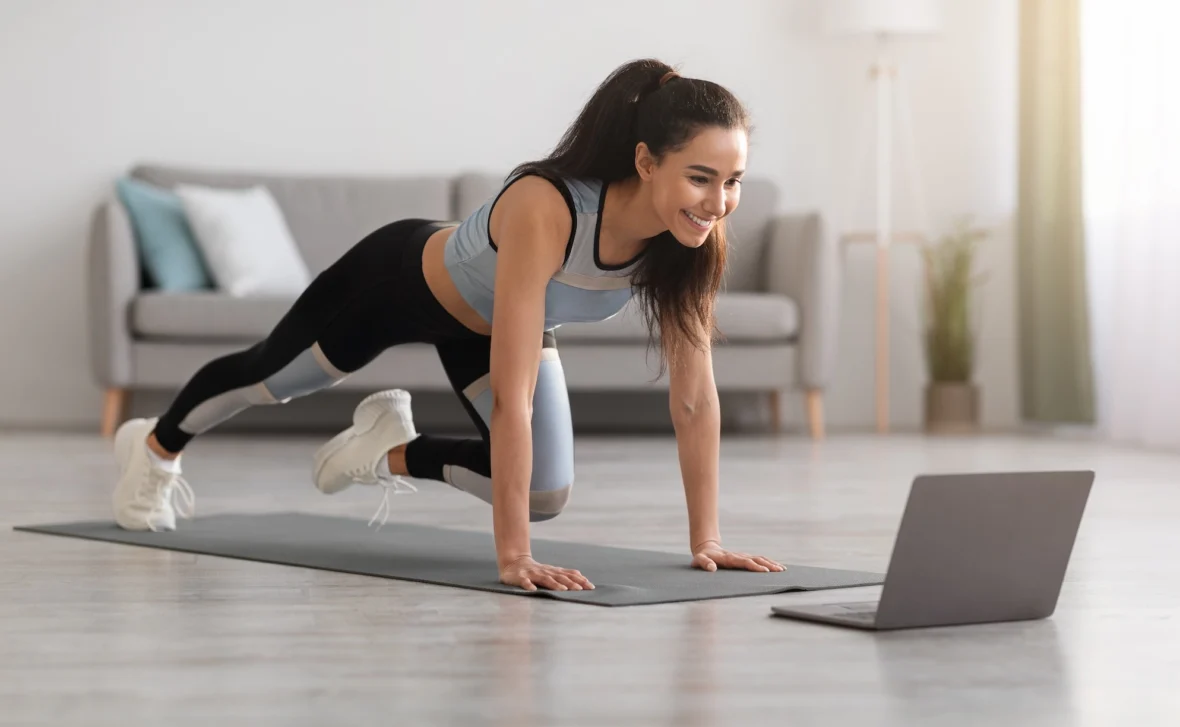
From injury liability to data privacy concerns, an intellectual property lawyer breaks down the key legal issues involved in disseminating digital fitness content
The COVID-19 pandemic significantly disrupted the fitness industry, forcing many gyms to close or scale down operations. To retain members and attract new audiences, many brick-and-mortar fitness facilities shifted classes and personal training online — a trend that continues post-pandemic.
However, online fitness classes involve a host of legal considerations that fitness professionals must navigate to ensure compliance and minimize liability. Below, we explore some of the key legal issues involved in offering fitness classes online, including liability concerns, intellectual property issues and data privacy laws.
Liability & Risk of Injury
When someone engages with fitness instruction online, liability for participant injuries remains a concern. Unlike in-person classes, where instructors can closely monitor form and intervene to prevent harm, virtual sessions limit oversight.
Accordingly, just as should be done at the gym, online fitness providers must require participants to sign clear and enforceable liability waivers before participating in any online class or training session. These waivers should acknowledge the inherent risks of physical activity and release the instructor and employer from liability to the fullest extent possible.
At the beginning of each session, a disclaimer should advise participants to consult with a physician before starting any exercise program and to immediately stop if they feel pain or discomfort. It is also important to verify whether existing liability insurance covers virtual sessions; some insurers offer specific coverage for online instruction.
Intellectual Property (IP)
Intellectual property (IP) becomes especially relevant in an online environment where content is created for public distribution and where that same content is easily copied and distributed by third parties without permission. Producing and distributing classes and training sessions online implicates a range of intellectual property issues.
Copyright Ownership: If a gym intends to own, reuse and perhaps generate additional revenue from recorded fitness classes or training sessions, it should seek to secure sole copyright ownership of those recordings. To establish ownership, those involved in video production (both in front of and behind the camera) should be required to execute proper work-for-hire agreements before production begins. Among other important legal points, such agreements should clearly state that the video recording(s) are owned by the gym from the point of creation and confirm that production participants hold no ownership rights. Contractors must execute such agreements, and while it may not be technically necessary to require employees to execute work-for-hire agreements, doing so provides clarity of ownership and avoids disputes.
Copyright Registration: Copyright exists without registration, but copyright registration provides critical protections to the registered owner in the event of infringement. A registered copyright serves as evidence of ownership and creation date, allows the owner to seek statutory damages instead of trying to prove actual damages and perhaps most significantly, enables successful litigants to recover attorney’s fees and costs incurred in infringement suits. Original audio-visual recordings are eligible for copyright registration, which should be sought upon the completion of each video or series.
Using Third-Party Content: Gyms and instructors should ensure that their videos and materials are original or properly licensed. This includes choreography, branded routines, graphics and music. Using unauthorized third-party content can lead to content removal, account suspension and copyright infringement liability. Ideally, the training video should be entirely original. If third-party content is included, secure an appropriate license to display and distribute that content. Music presents particular challenges since synchronizing music with moving images typically requires two separate licenses — a sync license from the composer’s publisher and a master use license, typically from the record label. Simply having public performance licenses from ASCAP or BMI will not do. Obtaining these licenses can be time-consuming, costly, and in some cases, impossible, since owners are not obligated to provide them.
Photo/Right of Publicity Releases: Anyone who appears in a training video should provide a release consenting to the recording and allowing the use of their name, image and likeness (NIL) for commercial purposes. As with work-for-hire agreements, these agreements should be signed before production begins. If class participants are recorded, their consent is required for both the act of being recorded and the distribution of the end-product video in which they appear.
Privacy & Data Protection
Online fitness platforms often collect personal data, including names, email addresses, payment information and sometimes, health-related data. Various data protection laws may apply, including the EU’s General Data Protection Regulation (GDPR), the California Consumer Privacy Act (CCPA) and others. These laws typically require businesses to obtain informed consent for data collection, provide a clear privacy policy explaining how data is used and offer users the ability to access, correct and/or delete their information.
Why It’s Important To Consult a Legal Professional
As the fitness industry embraces online training, facilities and instructors must address the legal implications that come with the shift. While the virtual model offers convenience, scalability, and perhaps, new revenue sources, it also raises unique issues around liability, intellectual property, privacy and a host of other legal and business considerations.
Seeking legal counsel to draft appropriate agreements, protect original content, license third-party content and ensure compliance with applicable laws will help fitness professionals protect their businesses while delivering valuable services in a digital world. An experienced attorney will be able to guide you through complex rules and regulations and ensure the health and wellness of your business. Fitness may be going digital — but legal responsibility remains very real.
Owen Seitel is the co-founder of Crown® LLP and an attorney with over 30 years of experience in intellectual property and business law. He counsels creatives and those who engage in their services on protecting, leveraging and monetizing their work. Reach him at [email protected]