Clair’s non-invasive wearable continuously tracks key hormones in real time, signaling a broader shift toward women-first health tech in fitness and wellness
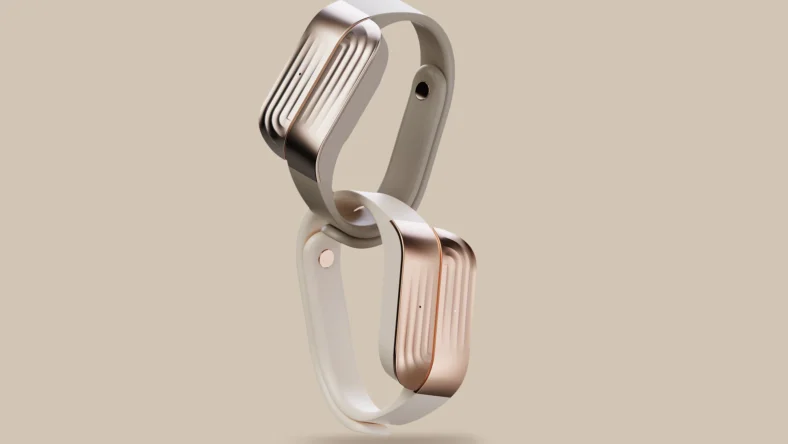
There seems to be a new wearable meeting nearly every need across fitness and wellness, but startup Clair is hoping to disrupt a space that is only just now catching up to women’s unique physiology.
The new wellness tech brand, founded by Stanford graduates Jenny Duan and Abhinav Agarwal, has pioneered a non-invasive continuous hormone monitor, which the company claims is the first of its kind.
The Clair wearable is a response to women historically being dismissed, misdiagnosed or ignored in clinical settings, especially for conditions related to their hormone health, providing a more proactive rather than reactive approach to healthcare with hormone insights arriving before the symptoms do.
“Women have been making health decisions with almost no hormonal data. Imagine managing diabetes without ever checking glucose; that’s essentially what women have been asked to do with their reproductive and metabolic health,” said CEO and co-founder Duan. “Clair’s mission is to change that by giving women the hormonal data they’ve never had access to, continuously and non-invasively, allowing them to make informed decisions about their fertility, cycle, and transition through perimenopause.”

“We’re building toward a future where that changes. Where noninvasive sensing becomes the foundation of healthcare,” the website reads. “Where your body’s signals are heard clearly, continuously, and acted on before small issues become crises. Intelligence that learns, predicts, and helps you stay ahead.”
Clair relies on multimodal sensing, with proprietary tech of 10 biosensors and 500 biomarkers to provide users with actionable insights to optimize fertility tracking and athletic performance, manage hormonal health and navigate life stages like perimenopause.
The wrist wearable provides real-time monitoring of estrogen, progesterone, LH and FSH without blood or urine tests.
“Today’s wearables track steps, heart rate, and sleep, but they tell women nothing about the hormones that fundamentally shape how they feel, perform and age,” CTO and co-founder Agarwal said. “Clair Health’s mission is to build the first device to continuously monitor hormones like estrogen, progesterone, LH, and FSH without a blood draw. That’s the gap: not another fitness tracker, but an actual window into your hormonal health.”
The tech also leverages artificial intelligence (AI) — specifically, AI trained on diverse female physiology, taking into account factors like PCOS and anovulation, to accurately provide tracking and intel for the nearly one-third of women with irregular cycles.
It also draws upon other health metrics and puts them in the context of hormonal shifts, including:
- Skin temperature, which can reflect hormonal changes like rises in progesterone post-ovulation
- Resting heart rate to track cardiovascular patterns that fluctuate throughout the menstrual cycle in response to estrogen and progesterone
- Heart rate variability (HRV), which measures autonomic nervous system changes influenced by hormonal fluctuations
- Sleep monitoring to see how rest is affected by progesterone and estrogen levels
- Breath rate and respiratory changes linked to progesterone’s effect on thermoregulation
- Electrodermal activity and motion tracking, which captures stress responses and activity patterns that interact with hormonal states
One of the main objectives of the device is to enable women to understand their bodies better and live more informed lifestyles around their cycles, as the brand claims it has a 94% cycle phase classification accuracy.
The continuous insights from Clair may help women understand the patterns behind their mood and energy levels, putting into context why some days women experience higher or lower levels of energy versus exhaustion, which goes hand in hand with why some workout days are easier than others.
The brand is positioning itself as a potential serious competitor to other major wearables such as Oura or Apple Watch. For instance, Clair is hoping that women will choose its wearable for the informed approach it takes, explaining how steep rises in progesterone overnight could still cause exhaustion after eight hours of sleep.
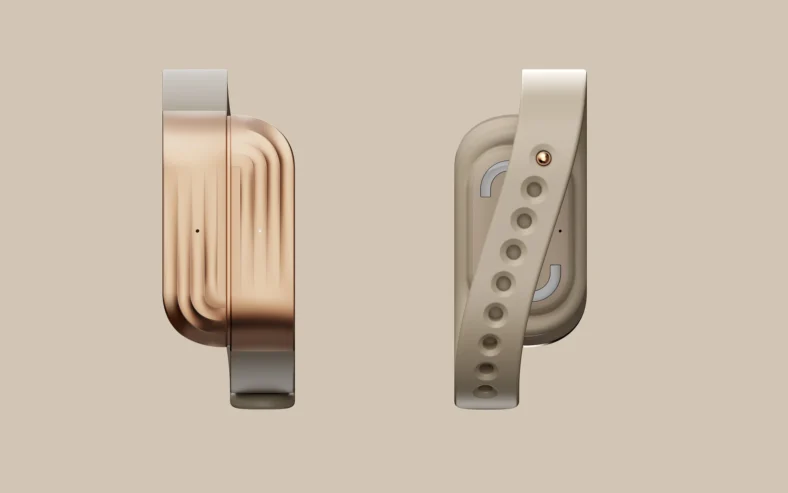
While the wearable is geared towards hormone health, the brand is also hoping to disrupt the fitness space by encouraging users to align training, recovery and daily workouts with their cycle to optimize performance, manage energy and reduce injury risk by enabling training adjustments with cycle-based physiological capacity rather than pushing through or holding back during different phases.
The Clair app launches this month for beta testing, as the wearable device is on track to launch later this year in November.
Other brands are starting to respond to the increased demand for hormone monitoring, especially as women in midlife become a key demographic for wellness companies.
Clair follows the launch of Peri, an AI-powered wearable designed to detect and decode symptoms of perimenopause from women’s health company IdentifyHer.
Last year, startup Eli Health also raised $12 million in Series A funding to support its non-invasive and instant hormone monitoring system, based on at-home saliva tests.
Meanwhile, Allbirds co-founders Liz and Joey Zwillinger raised $7 million in seed funding at the end of 2025 for Biologica, a new women’s health brand with supplements engineered for women’s hormonal age, not biological age, to support reproductive years, perimenopause and postmenopause.